
What Is the Best Age to Start Abacus and Is Your Child Ready
Many parents hear about abacus learning when their child starts school and wonder if they have already missed the ideal window. The good news is simple: there is no single perfect age. A child who starts at six can do very well. So can a child who starts at eight.
The better question is not only “How old is my child?” It is also “Is my child ready to learn in this way?”
Abacus learning works best when a child can recognise numbers, follow short instructions, move beads with control, and practise regularly without feeling pushed. Age helps, but readiness matters more.

The usual best age to start abacus
For most children, the best age to start abacus is between 5 and 7 years old.
At this stage, many children can:
Count with meaning, rather than just reciting numbers
Recognise written numbers
Sit for a short lesson
Follow a teacher’s instructions
Use their fingers with enough control to move beads
Begin to understand simple addition and subtraction
That makes ages 5 to 7 a strong starting range for formal abacus lessons.
A younger child may enjoy beads, patterns, counting games, and number play. But structured abacus training can feel hard if they are still developing focus, hand control, or number sense.
An older child can still benefit. In fact, children aged 8, 9, or 10 often progress quickly because they understand instructions faster and can practise with more independence.
So if a child has not started early, it is not too late. The Right Age to Start Abacus is the age when learning feels challenging but possible.
What children should know before starting
A child does not need to be “good at maths” before joining abacus lessons. That is one of the reasons many families choose it. The abacus gives children a clear, visual way to understand numbers.
Still, a few basics help.
Number recognition
A child should ideally recognise numbers from 0 to 9 before starting structured lessons. It also helps if they can read and say numbers up to 20, and later up to 100.
They do not need perfect fluency. But if every number still feels new, the abacus may become confusing.
Basic counting
A child should be able to count objects, not only chant numbers.
For example, if there are seven counters on the table, they should be able to touch or point to each one and understand that the final number means the total.
This matters because abacus learning is based on quantity. Beads are not decoration. Each bead stands for a value.
Simple listening skills
A short abacus lesson may include instructions such as:
Use your thumb to move this bead up
Clear the abacus
Show me five
Now add two more
A child who can follow simple one-step and two-step instructions will usually find lessons easier.
Fine motor control
The abacus uses small, repeated finger movements. Children need enough control to move beads up and down without getting frustrated.
They do not need perfect handwriting or advanced coordination. But if moving small objects is still difficult, a gentler start may be better.
Age-by-age guide to abacus readiness
Age is not the only factor, but it gives a useful starting point.
Age | What abacus learning may look like | Readiness signs |
4 years | Play-based number exposure | Enjoys counting, sorting, and bead play |
5 years | Gentle beginner lessons | Recognises numbers and follows short instructions |
6 to 7 years | Strong age for structured learning | Can practise regularly and understand simple sums |
8 to 10 years | Often faster progress | Better focus, confidence, and school maths links |
11 years and above | Still useful with the right goals | Wants to improve speed, accuracy, or confidence |
A four-year-old may be ready for playful abacus activities, but not necessarily formal training. A five-year-old might be ready if lessons are short and engaging. By six or seven, many children can handle a clearer learning structure.
For older children, the main question is motivation. If they feel abacus is “for little children”, they may resist. A good class will explain it as a mental calculation tool, not a toy.

How to tell if your child is ready
A child is probably ready for abacus learning if several of these signs are present.
They understand that numbers stand for amounts
If a child sees three apples and understands “three” as a quantity, they have the kind of number sense that supports abacus learning.
Try this simple check:
Place five small objects on a table. Ask, “How many are there?” Then remove two and ask, “How many are left?”
If they can think through this with objects, they are building the right foundation.
They can focus for 15 to 20 minutes
Young children do not need to sit still for an hour. That would be unrealistic for many five or six-year-olds.
But they should be able to engage with a short task for around 15 to 20 minutes, especially with encouragement and variety.
Abacus lessons often include bead work, oral practice, finger movements, and mental images. This variety helps, but a basic attention span still matters.
They are willing to try after mistakes
Abacus learning includes repetition. Children will get sums wrong. They will forget bead movements. They will sometimes clear the abacus too soon.
Readiness includes emotional readiness.
A child does not need to be calm all the time. But if every mistake leads to tears or refusal, it may help to wait a little or start with playful number games first.
They enjoy patterns, puzzles, or counting
Interest is a strong sign. A child who likes counting steps, sorting toys, matching shapes, or asking number questions may respond well to abacus learning.
Enjoyment does not need to look dramatic. Quiet curiosity is enough.
They can practise a little between lessons
Abacus progress usually comes from short, regular practice. A few minutes several times a week is often better than one long session.
If the home routine is already very full, it may be better to start when there is space for practice.
Signs your child may need more time
Starting too early can turn a useful skill into a stressful experience. Waiting a few months can make a big difference.
A child may not be ready yet if they:
Cannot recognise most digits from 0 to 9
Finds counting objects very confusing
Struggles to follow simple instructions
Gets upset quickly with small corrections
Has no interest in number activities yet
Cannot sit for even a short guided task
Dislikes fine finger activities such as threading, building, or sorting
This does not mean abacus is unsuitable. It may simply mean the child needs more playful preparation first.
Good preparation can include counting snacks, sorting buttons, playing board games, building blocks, singing number songs, and using fingers to show small quantities.
What happens in beginner abacus lessons
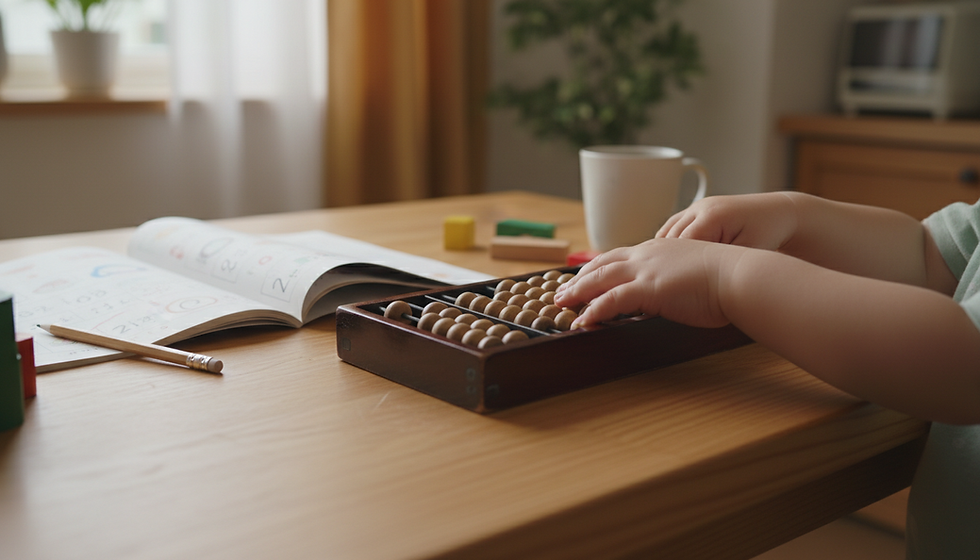
Beginner abacus lessons usually start slowly. A child first learns how the abacus is arranged and how to move the beads.
They may learn:
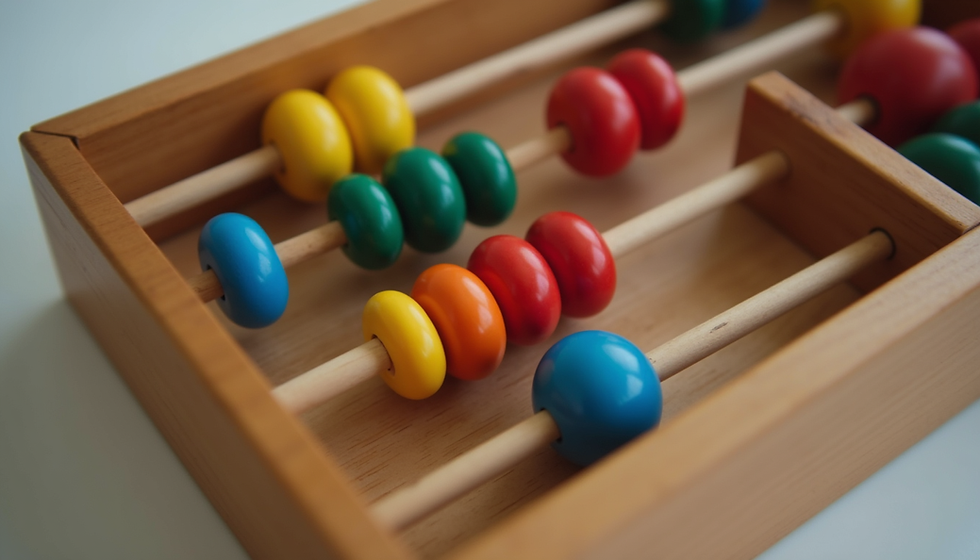
The value of beads
How to show numbers
How to clear the abacus
How to add small numbers
How to subtract small numbers
How to use the correct fingers
In many programmes, children later move from the physical abacus to visualising it in their mind. This is where mental calculation begins to develop.
Parents sometimes search for terms such as abacus classes for Kids, Mental maths classes, maths, finger maths, mental calculation because they want faster arithmetic skills. The abacus can support that, but the early stage is about building accuracy and confidence first.
Speed comes later.

Should a child start abacus before school maths becomes difficult
Many parents look for abacus lessons after their child begins to struggle with maths at school. That can be a good time to start, but abacus can also be helpful before problems appear.
The abacus gives children a physical picture of numbers. This can make place value, addition, and subtraction feel less abstract.
For example, “14” is not just a symbol on paper. On an abacus, a child can see one ten and four ones. This supports the kind of understanding children need in school maths.
Still, abacus should not replace school maths. It works best as a support. Children still need to learn problem solving, shapes, measurement, reasoning, and written methods.
A balanced approach matters.
Is earlier always better
Earlier is not always better.
A child who starts at four but feels pressured may make slow progress and lose interest. A child who starts at six with the right attitude may learn faster and enjoy it more.
The aim is not to race. The aim is to build a strong relationship with numbers.
A good abacus programme should match the child’s age and attention span. For younger children, lessons should feel active and encouraging. For older children, lessons should connect with school maths and personal goals.
How parents can prepare a child for abacus
A child does not need formal preparation, but a few simple habits can help.
Use numbers in daily life
Counting does not need to happen only in a workbook.
Ask simple questions during normal routines:
How many plates do we need?
Can you give me four spoons?
We have six grapes. What happens if we eat two?
Which number is bigger, 8 or 5?
These small moments build number confidence.
Play games with counting and turns
Board games with dice are useful because children count dots, move spaces, wait for turns, and compare numbers.
Simple card games can also help children recognise numbers quickly.
Build finger awareness
Abacus learning often uses specific finger movements. Activities that strengthen finger control can help.
Try:
Threading beads
Playing with building blocks
Using tweezers to pick up small objects
Drawing simple patterns
Clapping rhythms
Showing numbers with fingers
This makes the hand movements feel more natural later.
Keep practice short
If a child starts lessons, avoid turning practice into a battle. Short and calm is better than long and tense.
For many beginners, five to ten minutes of practice is plenty. Stop before the child becomes exhausted.
Choosing the right abacus class
The right class matters as much as the right age.
Look for a class that:
Groups children by level, not only age
Starts with clear basics
Uses encouraging correction
Gives manageable practice
Explains progress to parents
Allows children to ask questions
Treats speed as a result of skill, not pressure
For very young learners, the teacher should use games and movement. For older beginners, the teacher should explain why the method works and how it connects to school maths.
In the United Kingdom, families may choose between in-person abacus classes, online abacus classes, or a mix of both. The best option is the one a child can attend consistently and enjoy.
A quick readiness checklist
Use this as a practical guide. A child does not need every sign, but most should be present.
Readiness question | Yes means |
Can the child recognise numbers 0 to 9? | They can start learning bead values more easily |
Can they count real objects? | They understand numbers as quantities |
Can they focus for a short lesson? | They can follow a beginner class |
Can they move small objects with control? | They can manage bead movements |
Do they cope with gentle correction? | They can handle practice and mistakes |
Are they curious about numbers? | Motivation is more likely |
Can the family support short practice? | Progress will be steadier |
If most answers are yes, abacus is worth trying. If many answers are no, spend a few months building number confidence through play.
Frequently Asked Questions
Can a four-year-old start abacus?
Yes, but it should be playful and gentle. Many four-year-olds are better suited to counting games and bead play than formal abacus training. If the child enjoys it and lessons are short, it can be a positive start.
Is seven too late to start abacus?
No. Seven is still a very good age to start. Children at this age often understand instructions well and can connect abacus learning with school maths.
Does my child need to be strong at maths first?
No. Abacus can help children who lack confidence in maths. They only need some basic number recognition and counting skills before starting.
How long does it take to see progress?
Progress varies. Some children show better number confidence within a few weeks, while speed and mental calculation take longer. Regular short practice makes the biggest difference.
Will abacus confuse school maths methods?
It should not, if taught well. Abacus supports number sense and calculation. Children still need to learn the written methods used at school.

The best age is the age that fits the child
For most children, ages 5 to 7 are the strongest window for starting abacus. Some are ready earlier. Many do well later. The key signs are number awareness, short bursts of focus, finger control, and willingness to practise.
Also Read our Blogs on:
Are Online Abacus Classes Better Than In-Person Tuition? 5 Reasons Every Child Should Learn Abacus and Mental Maths How Mental Maths in UK Builds Confidence in Young Learners
If a child is curious, can follow simple instructions, and does not feel overwhelmed by mistakes, abacus can be a strong way to build confidence with numbers.
For a structured introduction to abacus and mental maths, explore abacus and mental maths for children. The right start should feel clear, steady, and encouraging from the first lesson.

Comments