
Soroban vs Abacus: A Simple Guide for Parents
A child can slide beads on an abacus and still be learning very different things, depending on the type of frame in front of them. That is where much of the confusion starts.
Parents often hear “abacus maths”, “Soroban”, “mental arithmetic”, and “Japanese abacus” used as if they all mean the same thing. They are closely related, but they are not identical. If you are choosing a class for your child, the difference matters.
The short answer is this: an abacus is the general name for a counting tool with beads, while a Soroban is a specific Japanese type of abacus used widely for structured arithmetic and mental maths training.
This guide explains the difference in plain English, so you can understand what your child will actually use, what skills they will practise, and what to look for in a class.

What is an abacus?
An abacus is a counting frame. It usually has rods or wires with beads that move up and down. People have used different versions of it across the world for centuries to count, add, subtract, multiply, and divide.
The word “abacus” does not describe one single design. It is a broad term, a bit like saying “vehicle”. A bicycle, car, and bus are all vehicles, but they work in different ways and suit different purposes.
In the same way, several tools can be called an abacus, including:
The Chinese Suanpan
The Japanese Soroban
The Russian Schoty
Simple school counting frames used with young children
Early counting boards and bead frames from different cultures
Some abacuses are mainly used for early counting. Others are built for fast calculation. Some use a base-ten system, while others have bead layouts linked to older systems of measurement and calculation.
For parents, the main point is simple. When a class says “abacus”, ask what kind of abacus they use. The answer will tell you a lot about the teaching method.
What is a soroban?
A soroban is the Japanese abacus. It has a slim, efficient design that makes it especially useful for arithmetic.
Most modern sorobans have:
One bead above the bar on each rod
Four beads below the bar on each rod
A horizontal divider called the reckoning bar
Vertical rods that represent place value, such as ones, tens, hundreds, and so on
Each lower bead has a value of one. The upper bead has a value of five. By moving beads towards the bar, a child represents numbers.
For example, on one rod:
One lower bead touching the bar means 1
Four lower beads touching the bar means 4
The upper bead touching the bar means 5
The upper bead plus two lower beads means 7
The upper bead plus four lower beads means 9
The next rod to the left represents tens. The next one after that represents hundreds. This matches the place-value system children learn in school maths.
That simple structure is one reason the soroban is popular in children’s arithmetic programmes. It shows number value clearly, but it also encourages children to move from physical calculation to visual mental calculation.
Soroban vs Abacus in everyday language
In many UK learning centres, “abacus classes” often use a soroban. That means a parent may sign up for abacus tuition, while the child is actually learning with a Japanese soroban.
This is not necessarily a problem. It simply means the words are being used in a general way.
The difference becomes more important when comparing teaching styles, tools, or online resources. If one course uses a soroban and another uses a basic counting frame, the child may have a very different experience.
Here is a simple comparison.
Feature | Abacus | Soroban |
Meaning | A general term for bead-based counting tools | A specific Japanese abacus |
Bead layout | Varies by type and country | Usually one upper bead and four lower beads per rod |
Main use | Counting, number sense, arithmetic, depending on the type | Structured arithmetic and mental calculation |
Learning path | Can vary widely | Often follows a clear progression from beads to mental imagery |
Best question to ask | “Which type of abacus do you use?” | “How do you teach children to move from Soroban to mental maths?” |
So, when people ask about Soroban vs Abacus, the clearest answer is that the Soroban is part of the abacus family, but it has its own design and teaching method.

How the Soroban helps children understand numbers
The Soroban is useful because it makes numbers visible.
Many children can recite number facts without fully understanding what the digits mean. For example, they may know that 10 comes after 9, but carrying across place values can still feel mysterious. The Soroban gives them something they can see and touch.
A child learns that a number is built from parts:
Units
Tens
Hundreds
Thousands
They also see that 10 ones become 1 ten, and 10 tens become 1 hundred. This links neatly to the maths vocabulary used in UK primary schools.
The Soroban also supports subitising, which means recognising small quantities without counting one by one. With practice, a child begins to see bead patterns as numbers. Five is not just “five things”. It is also one upper bead. Eight becomes one upper bead and three lower beads.
This visual pattern recognition can make calculation quicker and less stressful.
Why Soroban lessons often lead to mental maths
The Soroban is not only a counting tool. In many programmes, it becomes a stepping stone towards mental arithmetic.
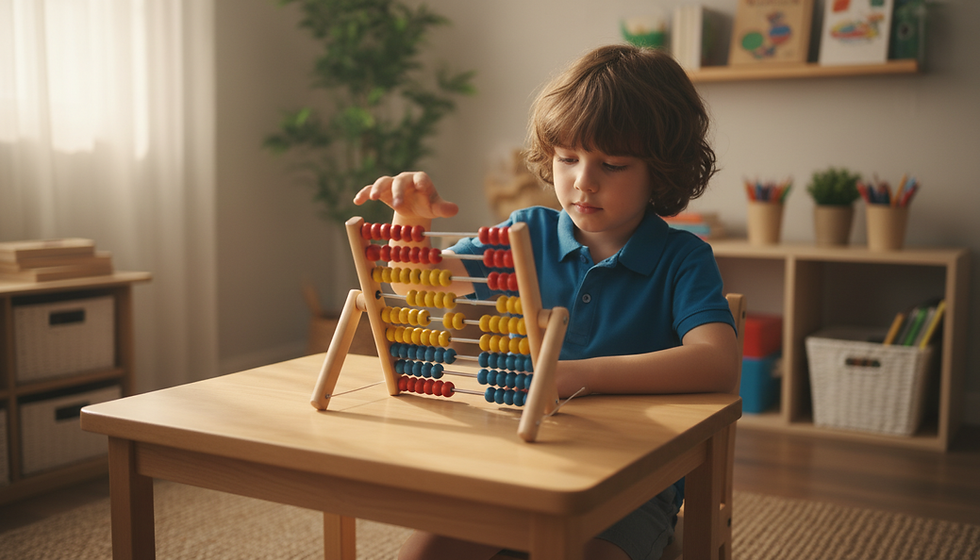
At first, children use the physical Soroban. They move beads with their fingers and say the steps aloud or in their head. Over time, they start to picture the Soroban without touching it. They may move their fingers slightly in the air, as if the beads are still there.
This is sometimes called using a mental abacus.
For example, a child working out 23 + 14 might picture:
2 tens and 3 ones
Add 1 ten
Add 4 ones
See 37 on the imagined Soroban
The aim is not to replace school maths. It is to build number confidence, speed, and concentration in a different way. Providers such as ReLearn Education often describe Abacus classes for kids as a route into mental maths and stronger maths confidence.
That said, mental calculation takes time. A few lessons will not produce instant speed. Children need regular practice, careful correction, and a calm pace.
Is a Soroban better than a normal abacus?
“Better” depends on the goal.
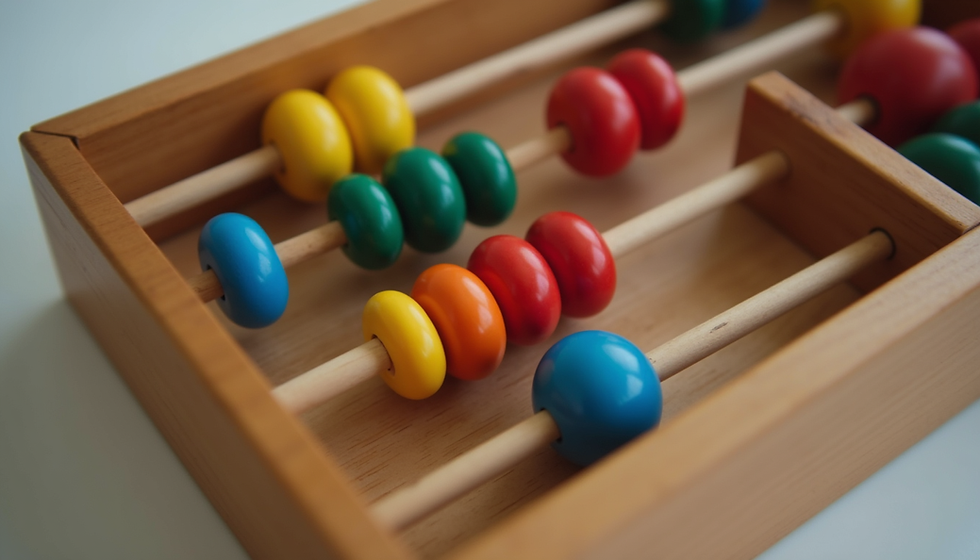
If the goal is to introduce a very young child to counting, a simple bead frame can be perfect. Large beads, bright colours, and basic counting games help children connect number words with quantities.
If the goal is structured arithmetic, place value, and mental calculation, a soroban is usually the better choice. Its layout is efficient, consistent, and well suited to formal methods.
Think of it this way:
A simple counting abacus
A Soroban
Best for early counting, one-to-one correspondence, and playful number exploration.
Best for systematic calculation, place value, and visual mental arithmetic.
A child does not need to start with a Soroban at age three or four. Some children are not ready for its rules and bead values that early. By around primary school age, many children can begin to understand the structure, especially with patient teaching.
The right tool is the one that matches the child’s stage, attention span, and learning goal.

What children learn in a soroban class
A good Soroban class should teach more than bead movement. It should build understanding step by step.
Typical early lessons may include:
How to hold and reset the Soroban
What each bead is worth
How rods represent place value
Simple addition and subtraction
Number bonds to 5 and 10
Carrying and borrowing using bead rules
Listening, concentration, and accuracy
Gradual mental visualisation
As children progress, they may work on larger numbers, faster calculations, multiplication, division, and timed practice. The pace should suit the child. Speed is useful, but accuracy and understanding come first.
A strong teacher will not rush a child into memorising tricks. They will check that the child understands why the bead movements work.
What to ask before choosing an abacus or Soroban class
Before enrolling, ask a few direct questions. Clear answers will help you avoid disappointment later.
Which tool do you use?
Ask whether the class uses a Soroban, a Suanpan, or another abacus. If the answer is just “abacus”, ask to see a picture of the tool.
How do lessons connect to school maths?
The class does not need to copy the school curriculum, but it should support it. Children should still understand place value, number bonds, and arithmetic language used in the classroom.
How much practice is expected at home?
Short, regular practice often works better than one long session. Ask what a realistic home routine looks like for a child in your age group.
How do you support children who struggle?
Some children find bead rules easy. Others need more repetition. A good class should allow for mistakes, review, and gentle pacing.
When do children start mental calculation?
Mental arithmetic should grow from confident physical use. If a programme promises very fast results without steady practice, treat that claim carefully.
Common myths parents hear about the Soroban
There are a few claims around abacus learning that need a calmer explanation.
Myth one is that Soroban learning is only for “maths children”.
It can help confident children move faster, but it can also support children who need a more visual way to understand numbers. The key is good teaching and realistic expectations.
Myth two is that it will confuse school methods.
It should not, if taught well. The Soroban uses place value, number bonds, and arithmetic thinking. Children may learn a different method for calculating, but the underlying maths should match what they learn at school.
Myth three is that speed is the main goal.
Speed can be exciting, but it is not the whole point. Accuracy, concentration, memory, and number sense matter just as much.
Myth four is that any abacus at home is enough.
A toy counting frame can be useful, but it may not match the method used in class. If your child is learning Soroban, it is best to practise on the same type of tool.
How to support Soroban practice at home
Parents do not need to become Soroban experts. Support at home can be simple.
Start by helping your child build a steady routine. Five to ten calm minutes can be more useful than a long, tired session. Keep the Soroban in the same place, so practice does not feel like a hunt for equipment.
Praise accuracy before speed. If your child gets a sum wrong, ask them to reset the beads and try again slowly. Rushing usually creates more mistakes.
It also helps to ask gentle questions:
“Can you show me how you made that number?”
“Which rod is the tens rod?”
“What changes when you add one more?”
“Can you check it another way?”
Try not to turn every practice into a test. Children learn best when they feel safe to make mistakes. A little curiosity from an adult can make the practice feel shared rather than pressured.

So, which should you choose?
If you are buying a tool for a preschool child, a simple counting abacus may be enough. It can help with counting, colour sorting, and early number play.
If you are looking for arithmetic training for a primary school child, choose a class or resource that uses a Soroban and explains the method clearly. The soroban gives children a structured way to see numbers, calculate with place value, and later imagine the bead movements mentally.
The main difference is easy to remember:
An abacus is the family of tools. A Soroban is one specific member of that family, designed especially well for calculation.
Also Read our Blogs on:
Are Online Abacus Classes Better Than In-Person Tuition?
5 Reasons Every Child Should Learn Abacus and Mental Maths
How Mental Maths in UK Builds Confidence in Young Learners
For parents, the best next step is to look beyond the label. Ask what tool is used, how the lessons are taught, and how the practice supports school maths. When the method is clear and the pace is right, the Soroban can become more than a bead frame. It can become a bridge between counting with hands and calculating with confidence.

Comments