
Can Children with ADHD or Dyscalculia Benefit from Abacus Learning
A child who struggles with maths is not always “bad at numbers”. A child who cannot sit still is not always “not trying”. For children with ADHD or dyscalculia, learning maths can feel like trying to hold water in their hands. The ideas slip away before they can use them.
Abacus learning can help some children because it makes numbers visible, touchable, and rhythmic. It gives the brain something concrete to work with before asking it to calculate mentally. That matters for children who find abstract maths hard, or who need more structure to stay focused.
It is not a cure for ADHD or dyscalculia. It does not replace specialist support, school adjustments, or advice from health and education professionals. But when taught well, at the right pace, Abacus learning can become a useful part of a child’s wider learning plan.
What Abacus learning actually does
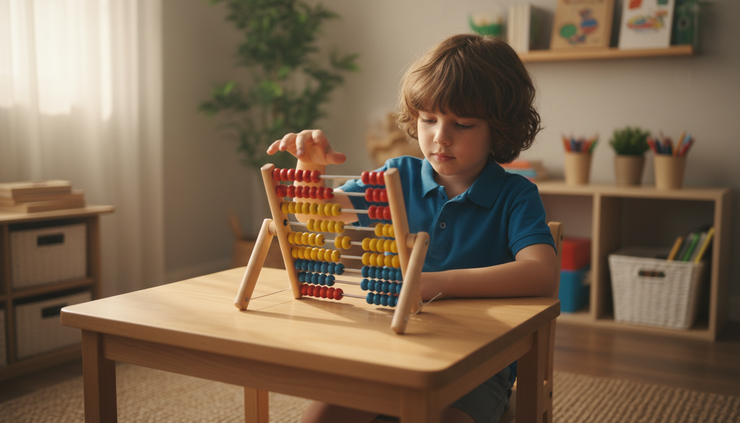
An Abacus is a counting frame with beads. Children move the beads to represent numbers, then use set methods to add, subtract, multiply, and divide. Over time, many learners begin to picture the beads in their mind and solve sums without the physical tool.
Good Abacus teaching usually moves through three stages:
Concrete learning
The child touches and moves real beads.
Visual learning
The child starts to imagine the bead movements.
Mental calculation
The child calculates using a mental image of the Abacus.
This matters because many children are asked to work with abstract symbols before they are ready. A worksheet full of digits can feel confusing. An Abacus gives each number a place and a movement.
For a child with dyscalculia, this can support number sense. For a child with ADHD, the physical action can help hold attention for longer than passive listening or copying from a board.
Abacus learning also tends to follow a clear routine. The child sees the same tool, the same bead values, and the same kinds of movements. Predictability can reduce anxiety and make maths feel more manageable.
How ADHD can affect maths learning
ADHD can affect attention, impulse control, working memory, and self-regulation. In maths, these challenges can show up in very practical ways.
A child may understand a method during a lesson, then forget the steps a few minutes later. They may rush and miss signs. They may lose their place halfway through a multi-step calculation. They may know the answer verbally but struggle to write it neatly. They may avoid maths because it has become linked with frustration.
Abacus learning may help because it adds structure and movement.
The beads give the child something to do with their hands. The rows and place values provide a visual map. The repeated routines can reduce the need to remember every step from scratch. Instead of holding everything in working memory, the child can use the Abacus as an external support.
For some children with ADHD, this can improve:
Task focus
The child has a clear action to complete.
Sequencing
Each calculation follows a visible order.
Error checking
The child can look back at the bead position.
Confidence
Small, repeated wins can reduce maths avoidance.
That said, Abacus lessons must be handled carefully. Long sessions, fast drills, or pressure to compete can make ADHD-related difficulties worse. Children may benefit from short tasks, movement breaks, clear praise, and a calm teaching style.
The goal is not to make a child sit perfectly still. The goal is to help the child stay meaningfully engaged with numbers.

How dyscalculia can affect number understanding
Dyscalculia is a specific learning difficulty that affects number sense and mathematical understanding. A child with dyscalculia may struggle to estimate quantities, compare numbers, remember number facts, understand place value, or recognise patterns in calculations.
This is not laziness. It is not a lack of intelligence. A child may read well, speak clearly, and solve complex problems in daily life, but still feel lost when faced with numbers.
Abacus learning can be helpful because it gives numbers a physical form. The child can see that ten ones become one ten. They can feel how adding changes a quantity. They can compare groups, move beads, and build a clearer link between symbol and amount.
This can support several key maths foundations:
Skill | How the Abacus may help |
Place value | Beads are organised by position, so tens, hundreds, and thousands become visible. |
Number bonds | Repeated bead patterns can help children recognise combinations. |
Addition and subtraction | The child can see quantities increase and decrease. |
Mental imagery | Over time, the child may picture number movements more clearly. |
Confidence | The tool can reduce guesswork and make maths feel less random. |
The phrase ADHD, Dyscalculia, Benefits of Abacus often appears in parent searches because families are looking for practical support, not vague promises. The most honest answer is this: Abacus learning may help, but it should be adapted to the child.
For dyscalculia, the learning must stay concept-led. If lessons focus only on speed, memorisation, or rapid mental calculation, the child may feel even more confused. The teacher should check that the child understands what the bead movements mean, not just whether they can copy them.
Why the Abacus can work well for neurodivergent learners
Children with ADHD or dyscalculia often benefit from multi-sensory learning. That means more than seeing or hearing information. They learn through touch, movement, rhythm, speech, and visual patterns.
The Abacus naturally brings several of these together.
It turns maths into movement
Moving beads gives the child a physical action linked to a number idea. This can be especially useful for children who struggle to learn by listening alone.
The action also gives feedback. If the beads are in the wrong position, the child can see it. If they move too many, they can move them back. This makes mistakes less final and more useful.
It supports working memory
Many maths tasks require a child to hold numbers, steps, and rules in mind at the same time. That can be hard for children with ADHD and for many children with learning differences.
An Abacus reduces some of that load. The child does not need to hold every part of the calculation in their head. The bead positions help carry the information.
It builds pattern recognition
Maths becomes easier when children notice patterns. The Abacus has repeated structures. Five beads, ten beads, place value columns, and common movement patterns all help children see relationships between numbers.
Pattern learning can be useful for dyscalculia, as long as it is paired with meaning. A child should learn both the pattern and the reason behind it.
It can make progress visible
For children who have had difficult experiences with maths, visible progress matters. Completing a short bead exercise can feel more achievable than finishing a full worksheet.
A teacher can set small goals, such as:
representing numbers up to 20
showing tens and ones
adding single-digit numbers
checking answers with bead positions
explaining one calculation aloud
These small wins can change how a child feels about maths.
Where Abacus learning may not help
Abacus learning is not the right fit for every child, and it should never be sold as a guaranteed fix.
Some children may find the bead rules overwhelming. Some may become frustrated by the fine motor control needed to move beads accurately. Some may focus on the movement but miss the maths concept. Others may enjoy the Abacus but still need direct support with reading word problems, maths vocabulary, or school exam methods.
There are also times when another form of support should come first. A child may need an educational assessment, occupational therapy advice, speech and language support, or a school-based plan. If a child has strong anxiety around maths, emotional safety should come before speed or performance.
Parents and teachers should watch for signs that the approach is not working:
the child becomes more anxious before lessons
mistakes lead to shutdowns or anger
the pace feels too fast
the child copies movements without understanding
lessons focus mainly on speed and ranking
the child’s school maths does not improve at all over time
The Abacus should reduce confusion, not add another layer of pressure.
What good Abacus teaching looks like for ADHD or dyscalculia
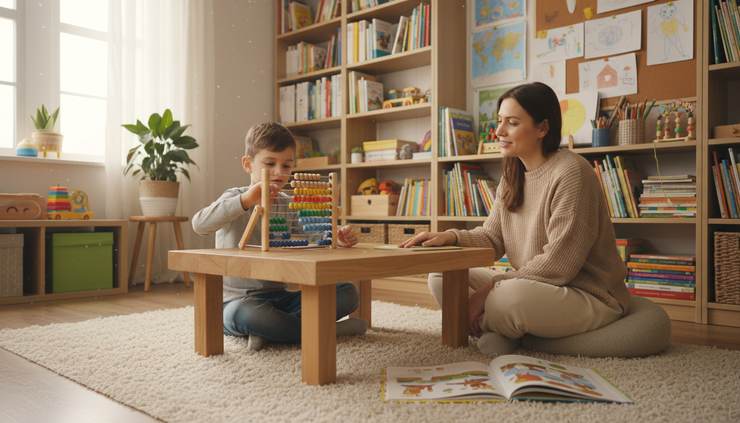
The quality of teaching matters more than the tool itself. A patient teacher can make the Abacus useful. A rushed teacher can make it stressful.
For children with ADHD or dyscalculia, good Abacus teaching often includes the following features.
Short, focused practice
A child does not need long sessions to benefit. Short practice, done consistently, can work better than one long weekly session that leaves the child tired.
For ADHD, short activities help protect attention. For dyscalculia, short tasks allow careful concept checking.
Clear language
Instructions should be simple and direct. A teacher might say, “Show me 14,” then “Now add 3,” rather than giving several steps at once.
Clear language helps children link the bead movement to the maths idea.
Slow progress through foundations
Some children need more time with place value, number bonds, and visual grouping before moving on to mental calculation.
This is not falling behind. It is building the base properly.
Low-pressure correction
Mistakes should be treated as part of learning. Instead of saying, “That is wrong,” a teacher can ask, “Can we check the beads together?”
This keeps the child engaged and reduces shame.
Links to school maths
The Abacus should not sit in a separate world. A child should learn how bead movements connect to written sums, number lines, place value charts, and real-life maths.
For example, after using the Abacus to add 27 and 15, the teacher can show the same calculation written in columns. This helps the child transfer the skill.
Practical ways to support Abacus learning at home
Home practice should feel calm and manageable. It does not need to become another battle over maths.
A few minutes at a time can be enough, especially at the start.
Try these simple approaches:
Keep practice predictable
Use the same time of day when possible, such as after a snack or before reading.
Start with easy wins
Begin below the child’s current level to build confidence.
Use spoken thinking
Ask the child to explain what they are moving and why.
Stop before frustration peaks
Ending on a good attempt is better than pushing until the child shuts down.
Praise the process
Notice effort, careful checking, and willingness to try again.
For children with ADHD, movement breaks can help. A child might complete three short sums, stand up, stretch, then return. For children with dyscalculia, repeating one concept in several ways can help. They might show a number on the Abacus, draw it, say it aloud, and build it with blocks.
Families looking at Abacus classes for Kids should ask how the provider adapts lessons for different learners. A good answer should include pacing, patience, concept checks, and communication with parents.
How to decide if Abacus learning is worth trying
A sensible trial can show whether the Abacus suits the child. The aim is not instant transformation. The aim is to see whether the child becomes more engaged, more confident, or more able to understand number ideas.
Before starting, ask:
Does the teacher understand ADHD or dyscalculia?
Will the child be allowed to work at a slower pace?
Are lessons based on understanding, not just speed?
Can parents get feedback on what to practise?
Is the child likely to enjoy the hands-on style?
After a few weeks, look for small changes:
the child is less resistant to maths
they can explain numbers more clearly
they make fewer place value errors
they check work more independently
they show pride in completing tasks
Progress may be uneven. A child might improve in confidence before scores improve. That still matters, because confidence often comes before stronger performance.
This article is for general information only. ADHD and dyscalculia are complex, and children vary widely. For specific concerns, speak with a qualified teacher, SENCO, educational psychologist, GP, or relevant specialist.
If you want a structured starting point, explore Abacus mental maths for children and see how the method can fit into a child’s broader maths support.
Frequently Asked Questions
Can Abacus learning cure dyscalculia?
No. Dyscalculia is a specific learning difficulty, and Abacus learning does not cure it. It may help some children build number sense, place value understanding, and confidence when taught at the right pace.
Is Abacus learning suitable for children with ADHD?
It can be. The hands-on movement and clear routines may help some children stay focused. Lessons should be short, calm, and flexible, with breaks when needed.
What age is best to start Abacus learning?
Many children start in primary school, once they are ready to recognise numbers and follow simple instructions. Readiness matters more than age. A child who is anxious or confused may need a slower, more playful start.
Should Abacus replace school maths support?
No. Abacus learning should support maths learning, not replace school help, SEN support, or specialist advice. It works best when connected to school concepts such as place value, number bonds, and written methods.
How long does it take to see progress?
Some children show more confidence within a few sessions. Deeper changes in number understanding usually take consistent practice over time. Progress depends on the child, teaching quality, and how well lessons are adapted.
The takeaway
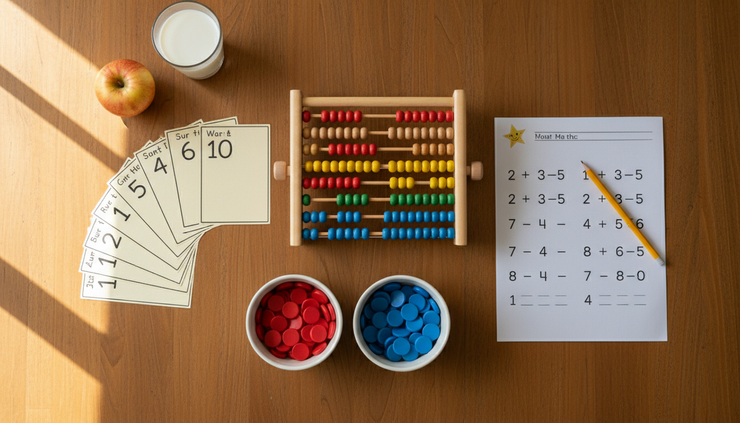
Children with ADHD or dyscalculia can benefit from Abacus learning when the teaching is patient, structured, and focused on understanding. The Abacus can make numbers easier to see, touch, and organise. It can also turn maths into a more active experience, which may suit children who struggle with passive learning.
The key is balance. Use the Abacus as a supportive tool, not a miracle answer. Look for calm teaching, short practice, clear explanations, and steady confidence-building. When those pieces are in place, Abacus learning can give many children a more positive way into maths.


Comments