
Why Thousands of Parents Around the World Choose Abacus Training
A child who freezes at a page of sums is not always “bad at maths”. Often, they are overloaded. They are trying to remember the method, hold numbers in their head, avoid mistakes, and keep up with the class pace all at once.
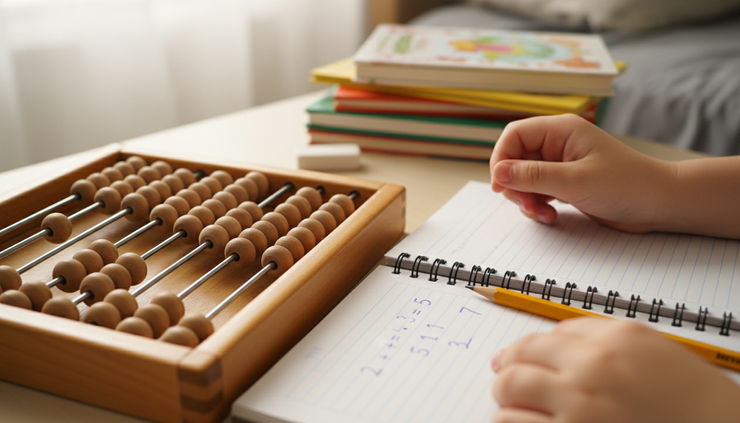
That is one reason thousands of parents worldwide have turned to abacus training. It gives children a physical way to see numbers, move them, and understand how calculations work before they are expected to do everything mentally.
The appeal is simple. Abacus learning is structured, hands-on, and surprisingly engaging. Children slide beads, speak answers aloud, use rhythm, and later picture the abacus in their minds. For many families, that mix of movement, memory, and mental maths feels very different from another worksheet at the kitchen table.

Why parents look beyond traditional maths practice
Most school maths lessons need to serve a whole class. A teacher may explain place value, addition, subtraction, multiplication, and problem solving to pupils who learn at different speeds. Some children grasp the idea quickly. Others need more time with concrete materials before moving to abstract symbols.
Traditional practice often looks like this:
Read the method.
Copy the example.
Complete a set of questions.
Mark the answers.
Repeat.
That works for some learners. But for children who struggle with attention, working memory, or number confidence, the process can feel flat. A page of symbols does not always show what is happening to the numbers.
The abacus offers another route. Each bead has a value. Each movement represents a mathematical action. Children do not just hear that 8 plus 7 can become 10 plus 5. They build that idea with their fingers.
This matters because early maths confidence is not only about getting answers right. It shapes how a child reacts to challenge. A child who believes “I can work this out” is more likely to try the next problem, ask a clearer question, and recover after a mistake.
Across the United Kingdom, parents often look for extra help when children reach key points, such as number bonds in Key Stage 1, times tables in Key Stage 2, or the move into more complex arithmetic. This is where abacus classes for kids, mental maths practice, and regular short sessions can support what happens in school.
How the Abacus Training builds maths from the fingers up
An abacus is not just a counting frame. Used well, it is a bridge between physical maths and mental calculation.
Children usually begin by learning bead values. They practise simple numbers, then move on to addition and subtraction. Over time, they learn to group numbers, make tens, and handle larger calculations. As they improve, they are encouraged to imagine the abacus rather than touch it.
That shift is the heart of the method.
A typical learning path may look like this:
Stage | What the child does | What it builds |
Physical abacus | Moves beads to show numbers and operations | Number sense and place value |
Guided practice | Solves short sums with prompts and rhythm | Accuracy and confidence |
Visualisation | Pictures the bead movements mentally | Working memory and focus |
Speed practice | Answers timed questions without rushing form | Recall and fluency |
The strongest programmes do not skip the early stage. They let children handle numbers until patterns become familiar. That can be especially helpful for learners who find abstract symbols difficult at first.
The benefits parents notice most
Abacus learning is often promoted for speed. Fast calculation is impressive, but it is not the only benefit. For many children, the bigger gains are quieter: better attention, stronger recall, and less fear around numbers.
Maths skills improve through number sense rather than memorising tricks
Good arithmetic depends on understanding how numbers relate to each other. Children need to know, for example, that 9 is close to 10, that 14 can be split into 10 and 4, and that 6 plus 7 can be solved by making 10 first.
The abacus makes these relationships visible.
When a child moves beads to make 10, they are practising place value and regrouping in a concrete way. This supports school methods because the child can see why carrying and exchanging work, rather than simply following steps.
Parents often report improvements in:
Number bonds
Addition and subtraction accuracy
Times table confidence
Speed in mental arithmetic
Reduced finger counting
Less anxiety during maths homework
Academic performance is best measured over time, not through one impressive session. A useful example is percentage accuracy. If a child completes 30 arithmetic questions and gets 18 correct, their accuracy is 60%. If, after several months of steady practice, they answer 26 correctly, accuracy rises to 87%. That kind of progress is easier to understand than a vague “better at maths”.
For UK families, school measures also give reference points. The Year 4 multiplication tables check includes 25 questions. Key Stage 2 maths uses arithmetic and reasoning papers, with pupils expected to show both fluency and understanding. Abacus work does not replace the curriculum, but it can strengthen the number fluency children need for these assessments.
Small studies of abacus learners in different countries have reported statistically significant gains in arithmetic calculation and working memory tasks. The evidence base is still mixed, so the safest claim is this: regular, well-taught practice can support the skills that feed into stronger maths performance.
Concentration improves because the task demands full attention
Many children can sit near a book without truly focusing on it. The abacus makes passive learning harder. Bead movement, number reading, listening, and answer checking all happen together.
A child has to track:
Which column they are using
Which beads have moved
The value of each movement
The calculation sequence
The final answer
This is focused attention in action. It is not concentration as a vague character trait. It is concentration trained through a specific task.
Short, regular practice tends to work better than long, tiring sessions. Ten to fifteen focused minutes can be more useful than an hour of distracted work. Parents often like this because it fits into normal family routines without turning every evening into a maths battle.
Memory grows through visual patterns and repetition
The mental abacus stage is where memory becomes central. Children picture the bead positions, move them in their imagination, and hold results long enough to complete the calculation.
That process can support working memory, which is the ability to hold and use information for a short time. Working memory matters in maths because children often need to remember a partial answer while doing the next step.
Abacus practice also uses long-term memory. Number patterns become familiar. Children start to recognise combinations quickly. They stop treating every sum as a brand-new problem.
This is why some children who once counted slowly on fingers begin to answer basic sums with greater ease. They have built a mental image that helps them retrieve and process numbers faster.
What makes the method different from standard tutoring
Traditional tutoring often starts with the school topic of the week. If the class is doing fractions, the tutor helps with fractions. If homework includes column subtraction, that becomes the focus.
Abacus teaching usually follows a separate progression. It builds calculation fluency step by step, then connects that fluency back to schoolwork. That structure is one reason parents find it attractive.
Traditional maths support | Abacus-based learning |
Often topic-led by homework or school tests | Follows a staged calculation pathway |
Uses written examples and explanation first | Starts with physical movement and visual patterns |
May focus on correcting mistakes after they happen | Builds habits through repeated accurate practice |
Can feel like extra schoolwork | Often feels more active and game-like |
Measures progress through marks alone | Measures speed, accuracy, focus, and recall |
The unique feature is not the abacus itself. A wooden tool cannot teach a child on its own. The difference comes from the blend of touch, sight, speech, rhythm, and mental visualisation.
That blend helps explain the method’s global reach. Variations of abacus learning are popular in parts of East Asia, South Asia, the Middle East, Europe, and beyond. Families may choose different providers, class formats, and practice routines, but the core idea remains the same: make number manipulation visible, then train the mind to do it without the tool.

What parents and educators say
No programme works the same way for every child. Age, teaching quality, practice habits, and the child’s starting point all matter. Still, common feedback from families and educators tends to fall into clear patterns.
The comments below are anonymised examples that reflect themes often reported by parents and tutors. They are not a guarantee of results.
“My child used to guess when sums got longer. After a few months, they started explaining the steps and checking their own answers.”
“The biggest change was confidence. Maths homework stopped ending in tears because the numbers made more sense.”
“As a teacher, I notice when pupils have stronger number bonds. They can focus on problem solving because basic calculation takes less effort.”
“The routine helped. Short daily practice made more difference than occasional long sessions.”
These comments point to a useful truth. Parents may sign up because they want better marks, but they often stay because they see a change in attitude. A child who feels capable in maths carries that confidence into lessons, tests, and homework.
Educators also tend to value fluency. When pupils can calculate accurately without using all their mental energy, they have more capacity left for reasoning. That matters as maths becomes more complex. Fractions, percentages, algebra, and word problems all rely on secure number foundations.
How to tell whether abacus learning is a good fit
Abacus lessons suit many children, but the best results usually come from consistency. A weekly class with no practice in between will have limited impact. A short, calm routine at home helps the method settle.
Signs a child may benefit include:
They understand ideas better with visual or hands-on materials.
They lose focus during written maths tasks.
They rely heavily on finger counting.
They know methods one day but forget them the next.
They feel anxious when asked to calculate quickly.
They need a confidence boost in arithmetic.
Good teaching should feel structured, patient, and age-appropriate. Children should not be pushed into speed before accuracy. Parents should also ask how progress is tracked. Useful measures include accuracy percentage, response time, level completed, attention during tasks, and confidence with schoolwork.
It also helps to keep expectations realistic. Abacus learning is not a shortcut that turns every child into a maths prodigy. It is a skill-based practice. Like music, sport, or reading fluency, progress comes from repetition, feedback, and time.
For families comparing options, a clear guide can make the decision easier. Learn more about abacus and mental maths for children and how the approach supports focus, calculation, and memory.
Frequently asked questions
What age is best to start abacus learning?
Many children start between ages 5 and 7, when they are building early number sense. Older children can also benefit, especially if they need stronger arithmetic fluency or confidence.
How often should a child practise?
Short, regular practice works best. Around 10 to 15 minutes on most days is often more useful than one long session each week.
Does the abacus replace school maths?
No. It supports school maths by strengthening number fluency, place value, concentration, and mental calculation. Children still need to learn the full school curriculum.
How long does it take to see progress?
Some children show more confidence within weeks. Stronger accuracy, speed, and mental visualisation usually take several months of steady practice.
Is abacus learning only for children who struggle with maths?
No. It can help children who need support, but it can also stretch children who already enjoy numbers and want faster mental calculation skills.

A practical takeaway for parents
Parents choose abacus learning because it makes maths more visible, active, and memorable. It gives children a way to handle numbers before asking them to hold everything in their heads. With patient teaching and steady practice, it can support stronger arithmetic, sharper focus, and better recall. Also Read our Blogs on:
The best reason to try it is not the promise of instant speed. It is the chance to help a child build calm, confident number habits that can last well beyond the abacus itself.


Comments